


Doors help in reducing fire incidences at home depending on the material from which they are made and their positioning within a home or a business property. Whether a fire incident originates from within or outside, it has the potential of causing havoc and undermining the security within a home. For this reason, doors are designed and positioned in such a manner that helps in reducing threats posed by fires.
The doors that largely assist in such efforts are fire doors and fire exit doors. There is not much difference between these two types of doors. Fire doors and fire exit doors both work in a way that reduces the risk posed by fire outbreak at homes or business premises. However, the fire exit doors are widely used at the entrance or exit areas of a building and fire doors are usually interior doors to stop the fire from spreading.
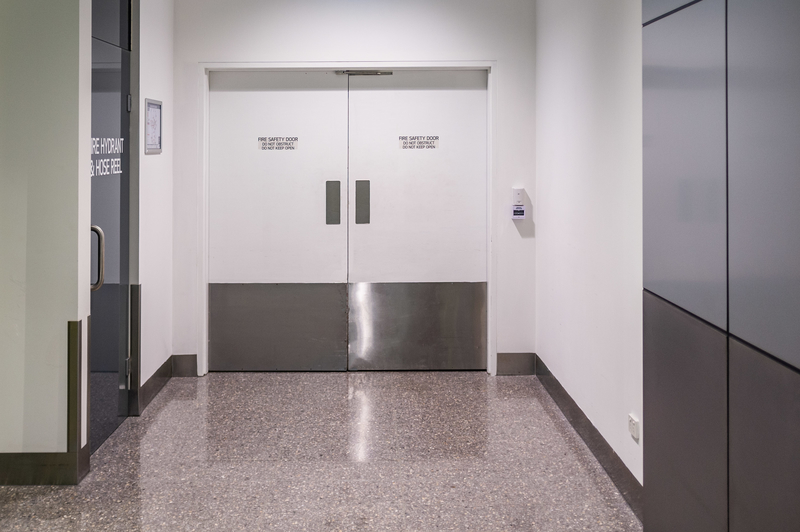
Fire Doors
Fire doors are on the face value, ordinary doors that separate two compartments. They have enhanced properties that help reduce the impact of fire from one room to the next. In this regard, fire doors work best when they are closed owing to a combination of unique properties that increase their effectiveness based on the material from which they are made.
Even though curing wooden fire doors with paint and certain chemicals would work in enhancing their fire-resistant properties, certain wooden products used in making fire doors such as Dricon, a fire retarded wooden material made from plywood, and lumber have better quality in making fire doors resistant.
Fire Exit Doors
These are doors that act as fire exit outlets and lead to safely designated areas in the event of a fire outbreak. Unlike fire doors that are positioned on the interior, fire exit doors are mostly situated on the egress of most buildings and serve as the final doors that allow quick escape in case of a fire emergency.
The positioning of fire exit doors is strategic; often in well-lit areas that enhance their visibility and delineate them from obstructions. To further achieve this objective, fire exit doors are painted and written in noticeable colours and signs that can be easily read and understood.
Because of their importance to serve as the final escape route to safety, they are seldom locked and as such, are easy to open when closed. To enhance their effectiveness to go beyond their visibility, panic bars, push pads, redlems and emergency bolts are usually fitted on them.
Though we may argue that fire exit doors are made of wooden material, they are mostly steel doors whose solidity at the exit is more valuable than the need to conduct less heat. Overall, the number of fire exit doors often reflects the number of people that use a given building.
Summary
Overall, fire doors and exit fire doors achieve their end objectives based on their unique properties, positioning to help manage fire incidences on the home front or at the business premises. While fire doors are located on the interior of homes and business premises and prevent fires from spreading from one room to the next, fire exit doors are perceptively grand and lead to safe escape in case of fire.
Here at Chiltern Door System, we are fully committed to providing you with the best most cost-effective door solution for your home or business. For enquiry, please contact us on 01234 757473 or send us a message via the online contact form here.